Seal at origin
The goods are inspected and sealed at the starting point, such as an approved bonded warehouse, before the TIR journey begins.
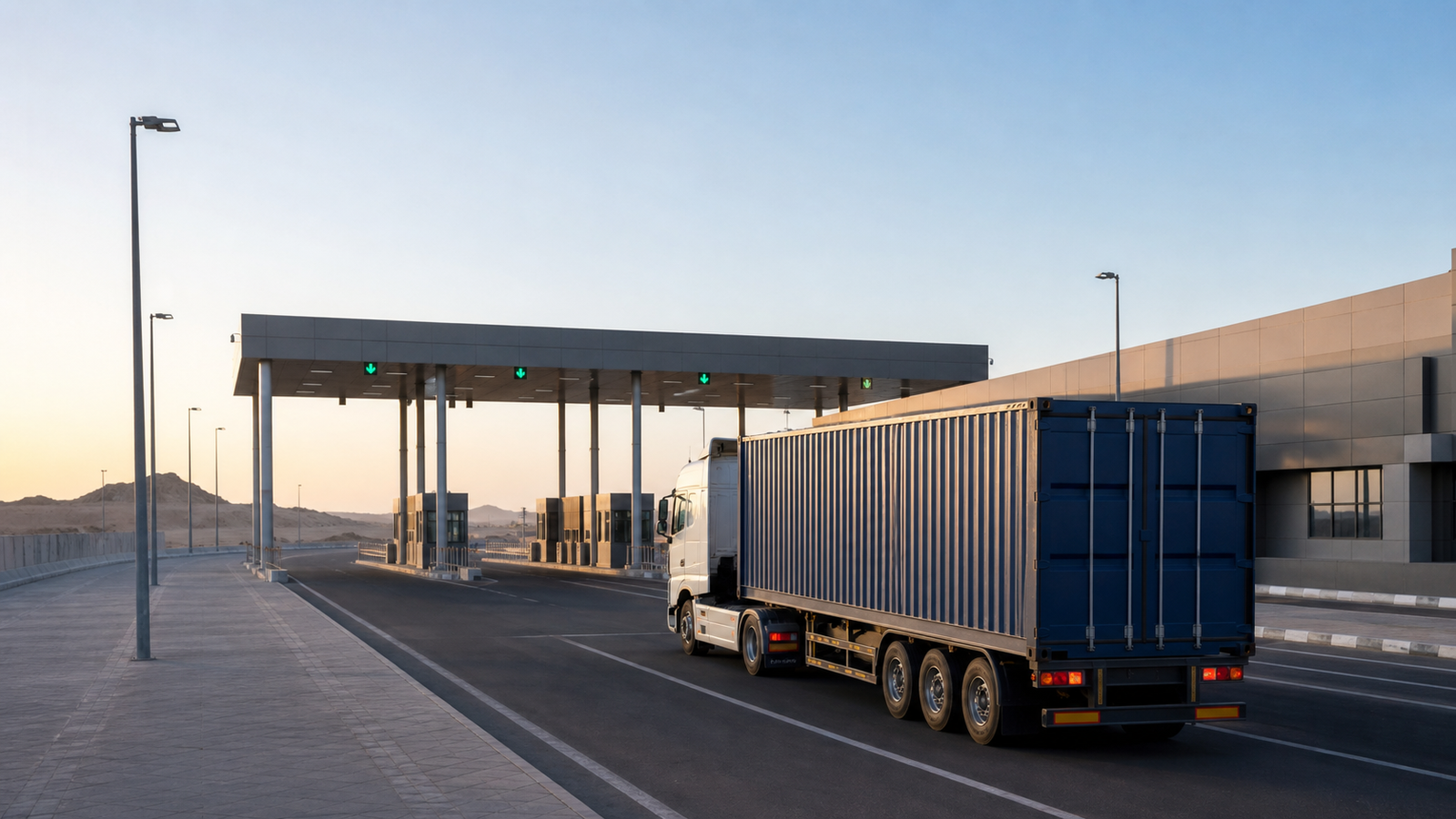
A secure, monitored TIR route for containerised cargo moving across borders into Qatar.
TIR (Transports Internationaux Routiers) is an international customs-transit system for moving sealed cargo across multiple borders with fewer routine interventions before final arrival. It does not remove customs obligations; instead, it gives participating authorities a controlled, documented framework for verifying an eligible sealed movement. Aero Trans provides a TIR-certified box-trailer service for import movements into Qatar, coordinating the road movement, TIR documentation and agreed customs steps as one managed transit plan.
The result is a controlled land-freight option built around faster border passage, lower avoidable transit cost and strong cargo integrity. Fewer avoidable interruptions can also reduce damage exposure and help protect freshness for time-sensitive goods. Each TIR movement is planned around the applicable route and customs requirements; Qatar’s digital customs environment, including Al-Nadeeb where applicable, supports the clearance process on arrival.
In the operating proposal, TIR can reduce delivery times by up to 50% to 90% versus conventional regional border movements. Actual transit time depends on the route, customs readiness, border conditions and authority processes.
The goods are inspected and sealed at the starting point, such as an approved bonded warehouse, before the TIR journey begins.
The truck displays the TIR plate so that the movement can be identified for the relevant transit procedure.
Customs officials check the relevant transit paperwork and permit passage in line with the applicable procedure.
The controlled road movement continues to the agreed destination in Qatar, with operational status updates at agreed milestones.
Goods are unsealed only at the destination customs office or approved bonded warehouse by authorised personnel.
The 5 + 1 sealing method brings together compatible equipment, mechanical restraint, serialized seals, TIR Carnet records and authorised release. It is applied only where the movement, equipment and authorities permit.
Plan for the cargo-unit profile. Standard 20-foot and 40-foot ISO containers, including tank containers, share compatible structural footprints; the operation selects a skeletal or flat trailer configuration that fits the load.
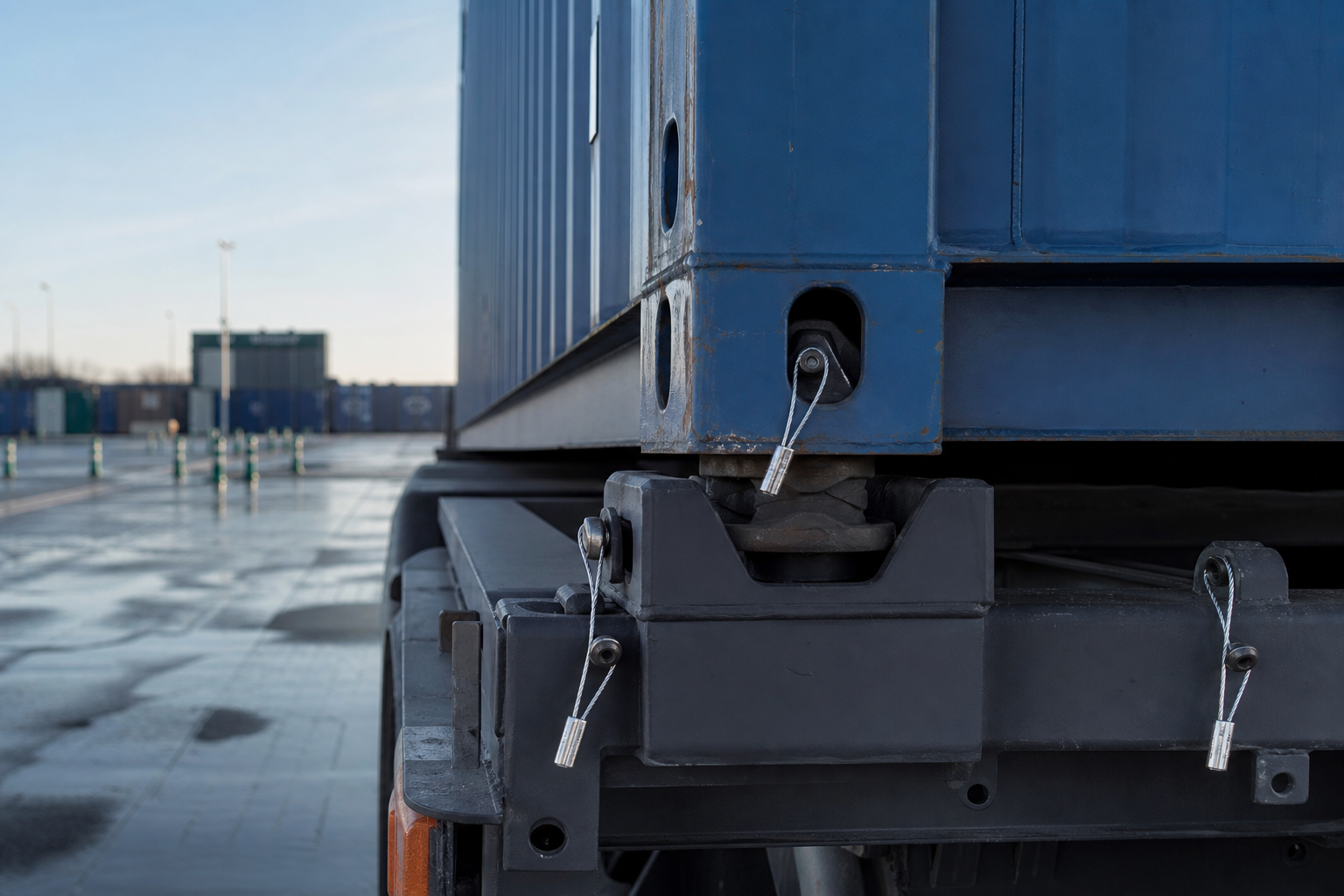
The container is aligned to its four anchor points. Outside-in steel locking pins and a sealed trailer-head connection are used to create structural immobilisation, so the unit cannot be lifted without dismantling the secured connection.
Five specialised, tamper-evident steel-wire seals secure the chassis lock joints; one final seal secures the container rear doors. Each seal carries a unique, non-replicable alphanumeric ID - six seals in total for a secured transit.
All six physical seal IDs are recorded in the TIR Carnet. Once customs signs the record, the physical sealing hardware and the legal transit documentation are linked as one chain of custody.
At each border, officials visually inspect the seals required for the movement and cross-reference them against the TIR Carnet. A missing, broken or mismatched seal triggers a stop and a chain-of-custody review.
Only authorised receiving officials may remove the customs seals at destination. After the chassis seals are released, locking pins can be withdrawn for controlled container lifting and final handover.
A practical TIR plan covering the road route, shipment readiness, required documentation and the applicable customs handoffs.
GPS monitoring provides location data, estimated arrival times and agreed geofence alerts, monitored through the operations dashboard.
A documented 5 + 1 seal formula, unique seal IDs and TIR Carnet records help maintain a traceable chain of custody for eligible loads.
Centralised fleet analytics support route optimisation, fuel efficiency, maintenance scheduling and compliance reporting throughout the operation.
These details help our specialist confirm the right scope, flag constraints early and respond without unnecessary back-and-forth.
We confirm cargo, route, dates, constraints and the result you need.
You receive a defined scope, commercial basis and responsibilities before execution.
One accountable team coordinates the agreed suppliers, documents and milestones.
We communicate progress, exceptions and completion records at the agreed points.
TIR is an international customs-transit system for sealed cargo moving across participating borders. The exact route, cargo, documentation and authority requirements are reviewed before dispatch.
Five serialized, tamper-evident wire seals secure the chassis lock joints, while a sixth seal secures the container doors. The unique IDs are recorded in the TIR Carnet and checked against the physical seals during transit.
Send the origin, Qatar destination, cargo description, container type and size, gross weight, readiness date, customs status and any special handling requirements. We will confirm whether the route and equipment are suitable.
Get a competitive, obligation-free quote from a team that has delivered for 40+ years.